
Advantage, Coaches – Celebrating USTA Coaching’s Breakthrough First Year
When USTA Coaching launched on August 13, 2025, it arrived with an ambitious promise: to support, educate and elevate everyone who helps deliver tennis in America. One year later, that promise has become a reality with a robust digital platform, a growing community and a clearer pathway for coaches at every level, from parents and volunteers introducing the game for the first time to full-time professionals building and sustaining lifelong careers.
The first year has shown that USTA Coaching is not simply a certification program or a benefits package. It’s an effort to strengthen the delivery system of American tennis. Coaches shape the first impression a player has of the sport. They determine whether a clinic feels welcoming, whether a young athlete feels seen, whether a new adult player returns and whether a facility can grow programming with consistency and quality. By investing in coaches, USTA Coaching is investing in the player experience itself.
“USTA Coaching was created with an ambitious vision: to elevate the coaching profession and build a stronger, more connected system for developing coaches across the United States,” says Craig Morris, CEO of USTA Coaching.
“The success of our first year demonstrates both the tremendous demand for this work and the essential role coaches play in the growth of tennis. By continuing to invest in coaches, we can improve the experience of every player and strengthen the future of our sport."
A Pathway for Every Coach
By establishing accessible entry points for parents, teachers, volunteers, school coaches, emerging coaches, part-time instructors and career professionals, USTA Coaching opens doors for everyone. Its education model allows coaches to learn online, attend in-person workshops and pursue badges and certifications aligned with their role and goals. The pathway is intentionally flexible, giving coaches the ability to build skills at their own pace while still working toward recognized standards.
“What has been most exciting about USTA Coaching’s first year is seeing coaches from every part of the country and every level of the game embrace the opportunity to learn, connect and grow together,” says Megan Rose, USTA Coaching’s Managing Director and Head of Business Development and Operations.
“The numbers tell an important story, but the real success is the community taking shape: coaches sharing ideas, building relationships and feeling more supported in the work they do every day.”
Recognizing that instruction alone isn’t enough to sustain a career, the program also prioritizes comprehensive professional support. Coaches need tools, career development, benefits and a professional network. Membership benefits include coaching resources, discounts, community connection and, at professional levels, support services including insurance that can help make coaching a more sustainable career. That has resonated with facility operators who manage full-time, part-time and seasonal staff.
The in-person component has expanded through USTA Coaching’s 44 Coaching Education Centers across the United States and Puerto Rico. These centers serve as local hubs where coaches can attend workshops and certification programming led by trained professional coach developers. That regional model lowers barriers to participation and gives USTA Sections, facilities and coach developers a direct role in building the coaching ecosystem in their communities.
Growing the People Who Grow the Game
Just as important, USTA Coaching’s first year has connected coach development to larger industry needs: belonging, leadership, career mobility and the next-generation pipeline. Its work with women coaches, diverse coaches, high school and collegiate athletes, Professional Tennis Management programs and emerging leaders reflects a broader view of what the profession needs to grow. Coaches from around the nation are gathering in August for the first-ever Coaches Open, a 3-day event featuring inspiring speakers, specialized workshops and on-court demos at Louis Armstrong Stadium.
Career development is becoming another defining part of the platform. The Virtual Career Fair connects facilities and coaches, while professional career consulting with Kopplin Kuebler & Wallace gives coaches guidance on resumes, interviews, negotiation, leadership and the business side of racquet sports. USTA Coaching also plans to launch a tennis-specific job board, giving job seekers and employers a central marketplace for seasonal, part-time, full-time and director-level roles.
A Stronger Future for the Coaching Profession
After one year, USTA Coaching’s story is still in its opening chapter. The first 365 days were about building the platform, proving the concept and showing coaches that support can be practical, accessible and national in scope. The next phase will be about scale: more coaches educated, more pathways clarified, more facilities connected to talent and more players benefiting from better experiences on court.
“The success of USTA Coaching’s first year reinforces a simple truth: The future of tennis depends on the people who teach, coach, mentor and inspire others to play,” says Butch Staples, the National Racquet Sports Director at Midtown Athletic Clubs. “By creating meaningful pathways for coaches to learn, grow, connect and advance, we are making substantial headway toward achieving our goal of 35 million players by the year 2035.”
For a sport with ambitious participation goals, the lesson from year one is clear. If tennis wants to grow, it must grow the people who deliver it. USTA Coaching has made that its mission – and after its first year, the movement is just getting started.
USTA Coaching by the Numbers
USTA Coaching has grown to more than 15,000 community members in its first year, including coaches, parents, volunteers, school providers, facility leaders and emerging professionals.
Women now represent 35% of the USTA Coaching community, supported by initiatives such as the Women in Coaching Cohort and Serving All: Aspiring Coaches powered by WeCOACH.
Under-30 coaches make up 26% of the community, driven by high school incentives, Spring Break Tennis engagement and NJTL and Community Impact Hub programming geared toward under-30 coaches.
More than 1,500 coaches have attended 135 USTA Coaching workshops led by experienced professional coach developers, most taking place at 44 Coaching Education Centers across the United States and Puerto Rico.
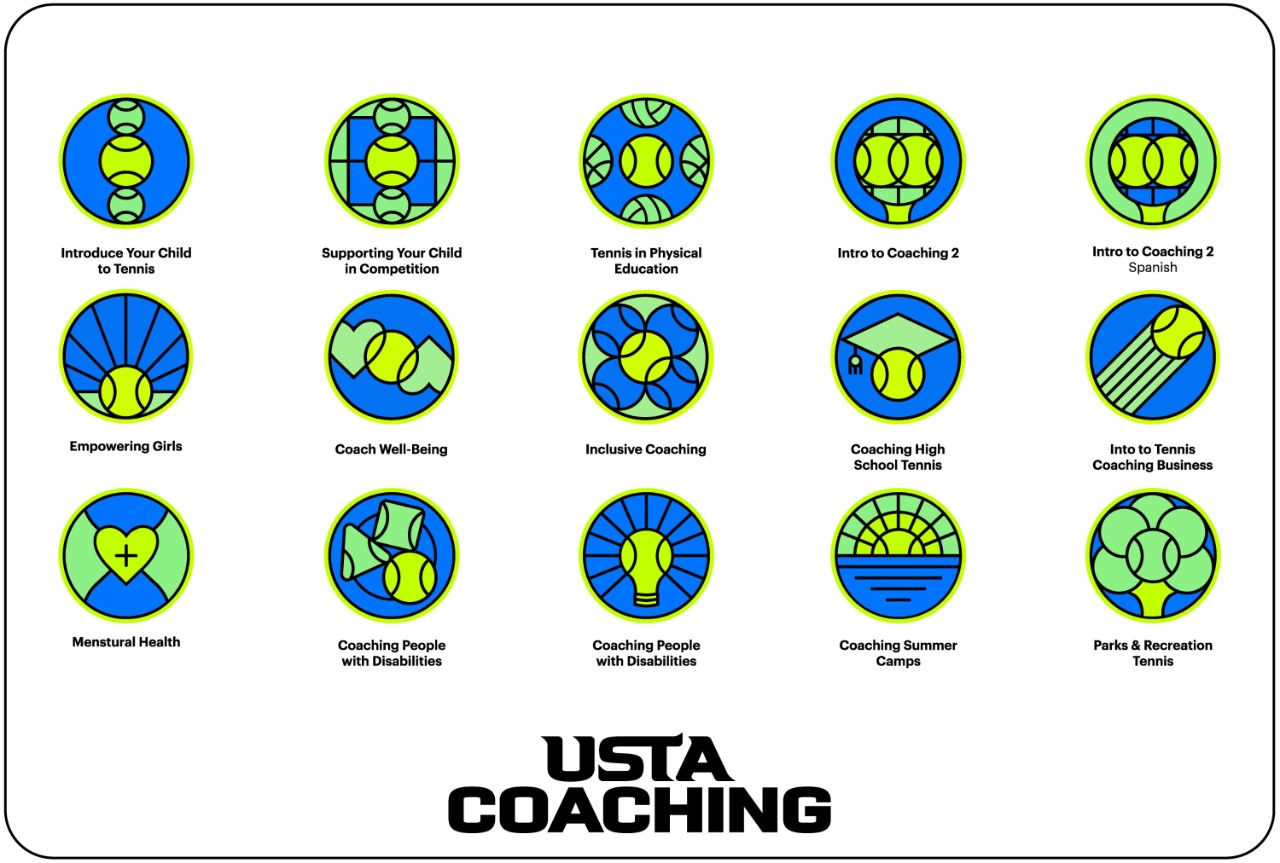
USTA Coaching members can now engage with 31 badges and 118 hours of online education, reflecting significant progress across the education pathway.
Badges and Certifications
Learning Built for the Way Coaches Work
USTA Coaching’s education pathway gives coaches multiple ways to grow. Badges provide focused learning in specific areas, while certifications create a deeper professional pathway for coaches ready to advance.
The platform includes online learning, in-person workshops and role-based development for parents, volunteers, school coaches, part-time instructors and career professionals. Topics include introductory coaching, group and private lesson delivery, junior and adult development, wheelchair tennis, cardio tennis and athlete-centered coaching.
The goal is practical: give coaches tools they can use immediately, while helping facilities identify staff members who are committed to continued education.

Women in Coaching
Building Visibility and Leadership
USTA Coaching’s Women in Coaching Cohort launched in January with 25 established female coaches from across the country. The program began with a three-day in-person experience at the USTA National Campus in Lake Nona, followed by virtual programming through August and a reunion at the 2026 Coaches Open.
USTA Coaching also partnered with WeCOACH on Serving All: Aspiring Coaches powered by WeCOACH. The eight-month program supports collegiate women’s tennis players who are considering coaching careers through education, mentorship, leadership development and an in-person summit in Orlando.
Together, the programs support women already leading in tennis while helping build the next generation of female coaches.

Diversity Initiatives
Expanding Access to Coaching
USTA Coaching’s diversity work includes collaboration with the USTA Diversity, Equity and Inclusion department on the Coach Inclusion Summit. In 2026, the Summit expanded to Kansas City in June and will take place at the USTA National Campus in Orlando in December. The effort is designed to give coaches from all backgrounds access to education, connection and professional growth opportunities.
USTA Coaching also is working on HBCU-connected coaching education workshops, Dinkins Grant distribution and a future diverse coach scholarship program. The broader goal is to make coaching education more accessible and to strengthen the communities where tennis is growing.

Next-Generation Coaches
Reaching High School and Collegiate Athletes
USTA Coaching is working to help young players see coaching as a real career path. Outreach includes high school incentives, Spring Break Tennis engagement, NJTL and Community Impact Hub programming and efforts to onboard more under-30 coaches.
Collegiate outreach includes collaboration with Professional Tennis Management programs and engagement with student-athletes who may be considering careers in tennis. The goal is long-term: connect young people who already love tennis with the education, mentorship and career opportunities needed to stay in the sport.
This story appears in the August issue of RSI Magazine.
