
Vania King: Building Bridges Between Culture, Coaching and Championship Tennis
Vania King’s path to becoming a Grand Slam champion was shaped long before she stepped onto the world’s biggest courts. As the daughter of Taiwanese immigrants, her foundation was built on resilience, discipline and collective responsibility.
“My cultural background was 100% influential,” King explains. “My parents came from a place where life is a series of challenges, and with grit and family support, you overcome them.”
For coaches, this context matters. Athletes do not arrive as blank slates. They carry deeply embedded values that shape how they respond to pressure and success.
Navigating Two Cultures, One Identity
King describes her upbringing as a balancing act between two distinct worldviews. “There’s a strong collectivist element in Asian culture, where group success comes first,” she says. “In American culture, it’s much more independent. Navigating that wasn’t seamless.”
For coaches, this tension can influence everything from communication style to motivation. Some players may prioritize family expectations over personal expression. Others may struggle with autonomy. Understanding this dynamic allows coaches to meet athletes where they are, not where assumptions place them.

Coaching Beyond the Court
Throughout her career, King has worked with coaches from diverse cultural backgrounds. While few explicitly addressed cultural identity, their developmental approaches evolved alongside her growth.
Early on, coaching resembled a traditional teacher-student model. Later, it became more collaborative. “As I got older, it became more of an equal footing, working together on what my identity was as a player,” she says.
This shift highlights a key lesson: effective coaching adapts not only to performance level, but to personal development. Cultural awareness accelerates that process.
King has coached at various points in her career and has a particular passion for doubles, which she considers her specialty. In addition to coaching, she engages in consulting work with teams, focusing not only on on-court performance but also on broader evaluations of goals, development and overall progress.
She highlights the importance of mutual support and cultural exchange as a way to foster a more inclusive and enjoyable tennis environment.
"The more you see people like you performing well, the more confidence you have."
Vania King
Representation and Context Matter
Growing up, King saw few players who looked like her. “I don’t recall many top AAPI players,” she says. “Michael Chang was our GOAT. The more you see people like you performing well, the more confidence you have.” Today’s landscape is more diverse, but representation alone is not enough.
King's first coach was her dad, who brought a strong cultural identity into coaching. “He had high expectations of obedience, work ethic and success, and he had a certain way he wanted to do things, which wasn't necessarily in line with the typical pathway,” King shares. “I wish somebody had talked to him more about the struggles that I might have been dealing with. If it had come from a performance lens, that's very much in line with AAPI values, and I think it could have helped shift his thinking about the importance of rest, recovery and periodizing my schedule, all very important for performance and scaling up.”
This is a practical takeaway: framing communication in culturally relevant terms, such as performance, discipline or long-term outcomes, can improve alignment with families.
Supporting the Next Generation of AAPI Tennis Players
In helping to start the Asian-American Pacific Islander Tennis Association, one key initiative for King has been the Emerging Leaders Mentorship Program. This nonprofit initiative pairs former AAPI champions with up-and-coming junior players of AAPI descent in a six-week program.
Reflecting on the experience of serving as a mentor in the most recent cohort, King says, “I like to think it was helpful for my mentee, but it was definitely impactful for me as well. That’s what I really wanted when I was a kid, but I didn’t feel like I had those moments of support.” The program represents an effort to provide that support now.

Serving Up Hope: Access as the Starting Point
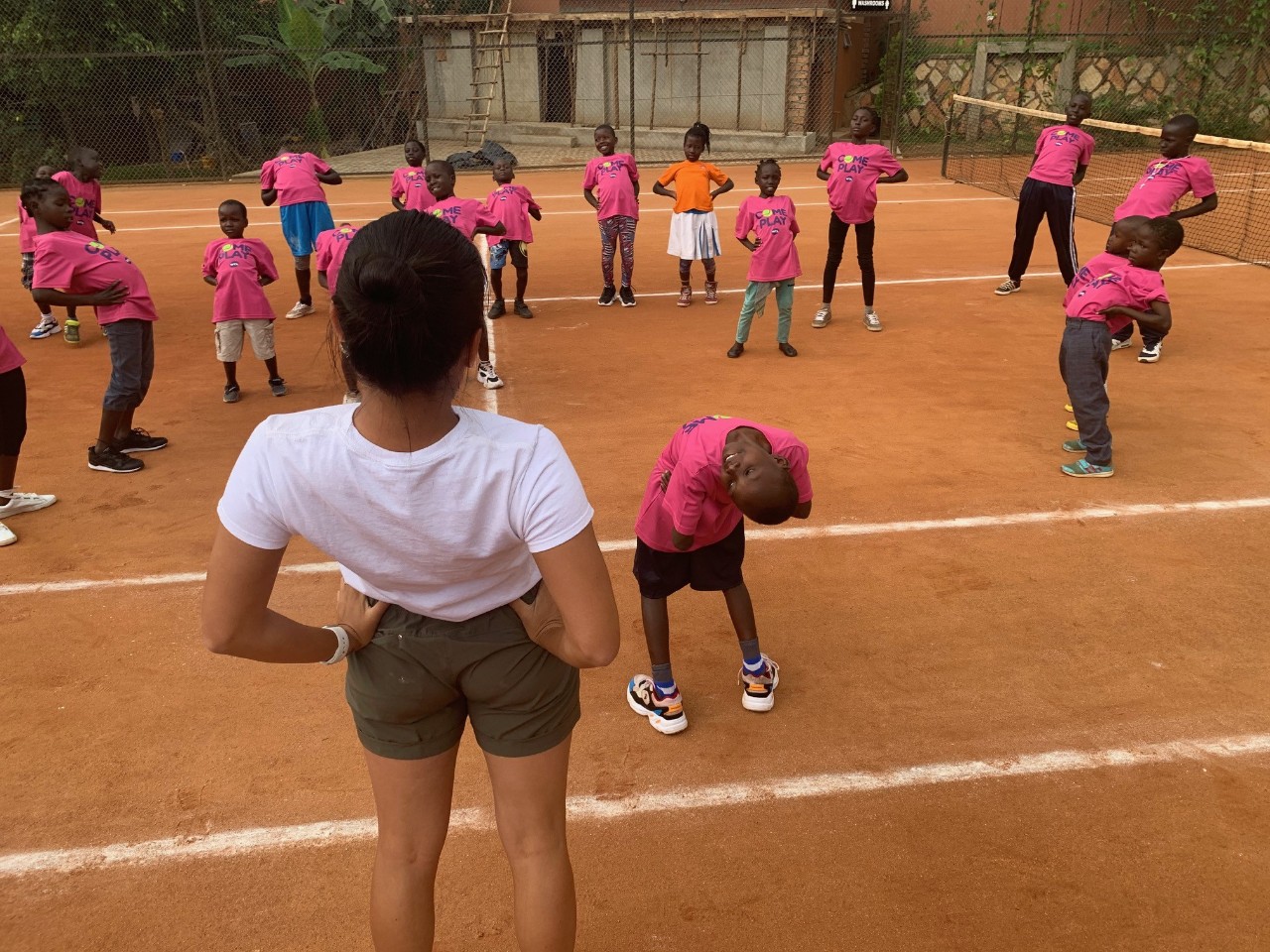
Through her nonprofit, “Serving Up Hope,” King is actively reshaping access to the sport. The organization delivers grassroots tennis programming, education and mentorship both internationally and in U.S. communities.
“We want to shift the narrative that tennis is exclusive,” she explains. “You don’t even need a court to start. You can put up a mini net in a backyard and it can be very inclusive.”
By training community organizations and lowering barriers to entry, the initiative connects high-performance principles with local impact, bridging the gap many players never cross.
The Missing Ingredient: Fun
Despite her success, King identifies a critical gap in her early development. “Fun was not something I learned as a kid,” she says. “Winning was fun, but that’s different."
For coaches, especially at the beginner and intermediate levels, this is a clear directive. Long-term development depends on intrinsic motivation. “Tennis requires a lot of commitment,” King says. “You can’t play for a year and then be very successful at it. So there has to be motivation. As I see it, that motivation comes from having fun, especially for younger players.”
Understanding what each player enjoys – competition, social play, physical activity – allows coaches to tailor experiences that sustain engagement over time.
A More Inclusive Path Forward
King’s work with mentorship programs for AAPI athletes reflects a full-circle moment, providing the guidance she once lacked. “I wanted those moments of support,” she says. “Now we can provide better education, better connection and a sense of pride.”
For coaches, the message is direct: inclusion is not a separate initiative. It’s embedded in how players are understood, supported and developed.
